Dossier: The Founding of the Socialist Unity Party of Germany (SED)
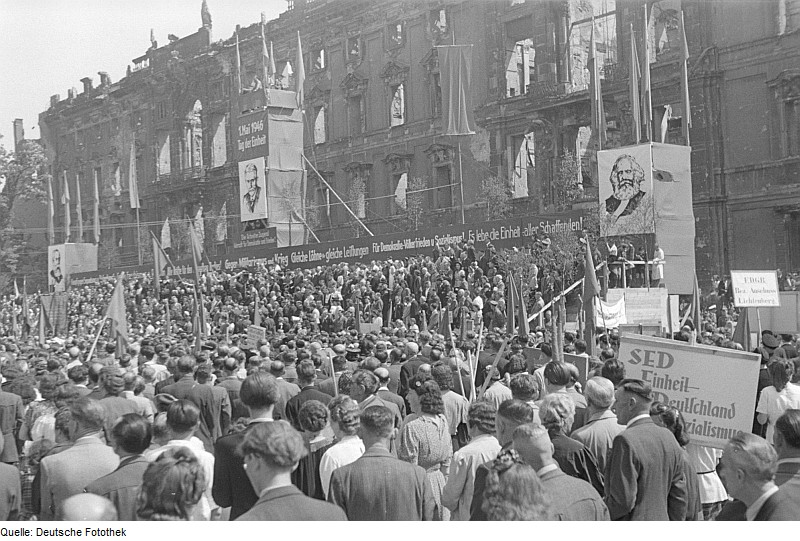
A dossier to mark the 80th anniversary of the unification of the Communist Party of Germany (KPD) and the Social Democratic Party of Germany (SPD) in April 1946.
In this article we explore the question of how people’s relationship to their own history changes during the transition from capitalism to socialism, and discuss this issue using concrete examples drawn from the experience of socialist development in the German Democratic Republic (GDR).
In this article, we explore economic problems and debates in the DDR during the period of socialist construction (1950–1962). In the struggle against Western subversion and Yugoslav ideas of ‘self-managed socialism’, the DDR erected a foundational architecture for both its practical planning policy and the field of political economy.
A response to Die Linke leader Heidi Reichinnek that the GDR was not socialist and we have nothing to learn from it.
A new book on health care in Soviet Georgia, the DDR, and socialist Yugoslavia.
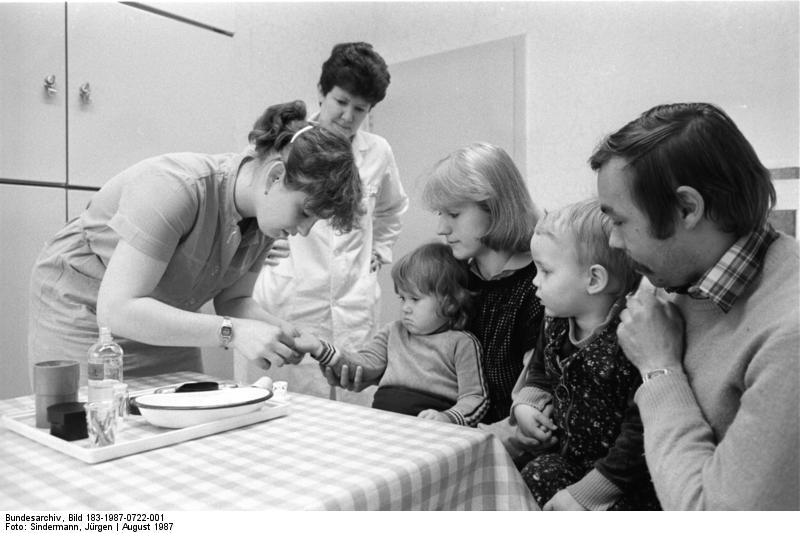
In the DDR, health care was not a commodity, but a right guaranteed in the constitution. What conditions were necessary for this and what experiences were made?
With a resolution adopted on 23 January 2025, the European Parliament is again trying to rewrite history and present the Soviet Union as an accomplice of fascist aggression rather than a victim.
The well-known DDR filmmaker Walter Heynowski died in November 2024 at the age of 96. John Green, an English filmmaker who studied in the DDR and worked as a foreign correspondent for DDR television, wrote the following eulogy for Heynowski’s funeral.
This lecture will examine the development of the theory of “non-capitalist development” in socialist scholarship during the 20th century and highlight some concrete experiences in countries such as Mali, Congo-Brazzaville, Afghanistan, and Syria. When exploring both the successes and limitations of this strategy, we will also discuss how the collapse of the “Eastern bloc” in 1989 and the subsequent rise of China have influenced the prospects of independent development in the former colonies today.