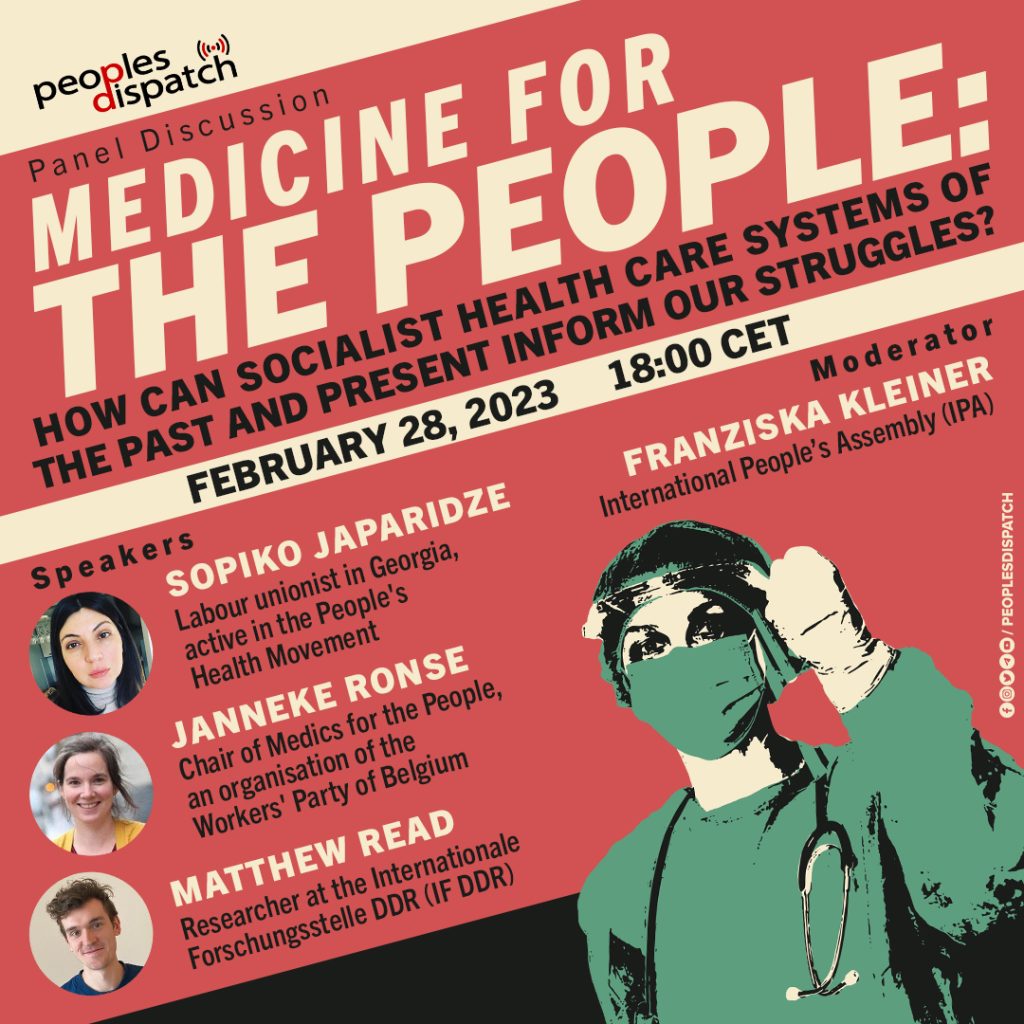
EVENT: MEDICINE FOR THE PEOPLE
What characterizes the socialist approach to health? We will explore experiences from the German Democratic Republic, the Georgian Soviet Republic, and modern-day Belgium to understand how socialist systems of the past and present have defied economic constraints and transformed health care to serve the needs of the people rather than profit.
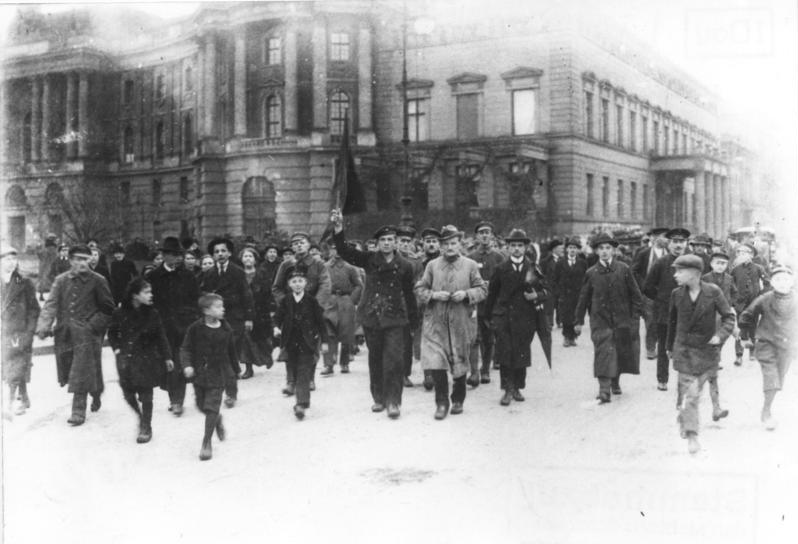
Article: November 1918 – The Unfinished Revolution
On 9 November 1918, the German Empire was toppled after mass uprisings brought the monarchy and First World War to an end. The achievements and limitations of the November Revolution greatly shaped the development of the German state in the fateful decades of the 1920s and 1930s. Analysing the historical lessons of the November Revolution has also been a crucial point of contention within the German workers’ movement, for it raises the question of the working class’s relation to state power.
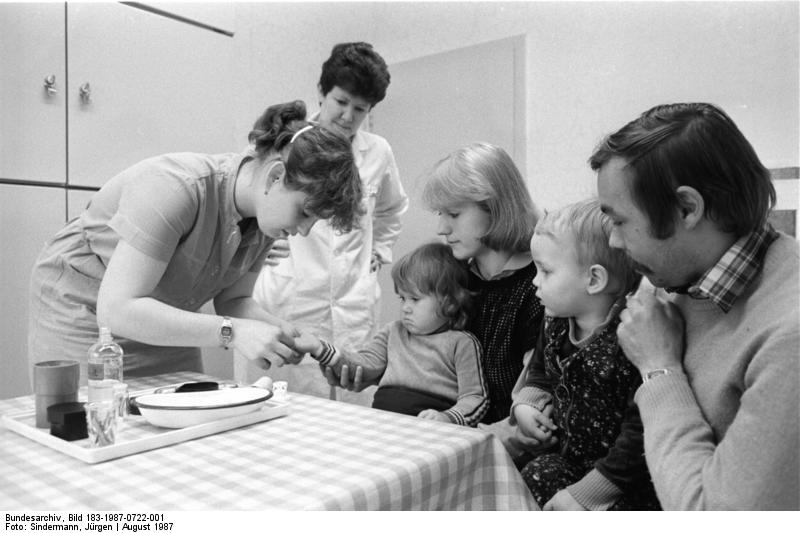
“A Back-Up for Nursing Care” – IF DDR ARTICLE
Professional ethics and health policy do not form a dichotomy. An article on working conditions in the GDR’s health care system.
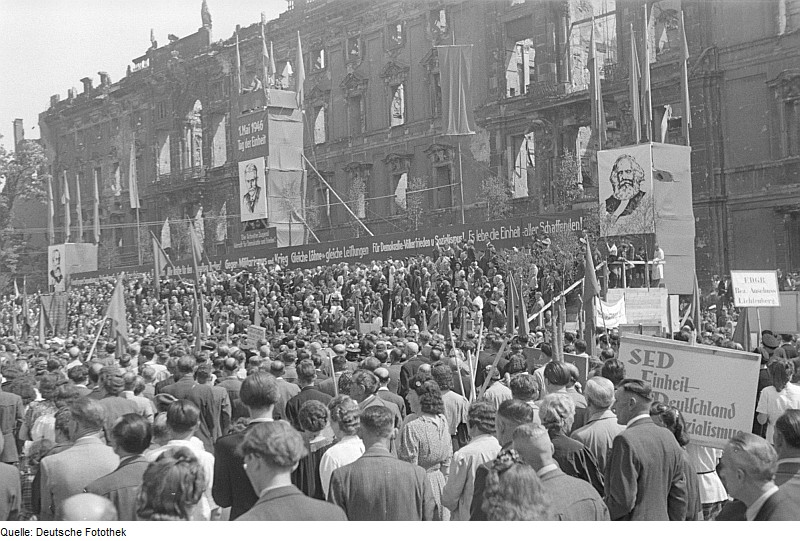
Article: The German Workers’ Movement and the Struggle for a Neutral, Democratic Germany
In this article, we examine the circumstances that led to the division of Germany and the development of socialist strategies during the decisive post-war period (1945–1952).

EVENT: THE HEALTH CARE SYSTEM OF THE GDR (IN GERMAN)
Together with the social physician Dr. Heinrich Niemann and the former head of a polyclinic in Berlin Marzahn, Dr. Wolfgang Dübel, as well as the doctor Dr. Anita Rausch, who is active in medical training and further education, we discussed the health care system of the GDR and what significance the experiences made here can play for current political debates. We looked at the health policy orientations of the GDR and how they were realised in practice, alongside the contradictions and debates that arose in the process.

RISEN FROM THE RUINS LAUNCH EVENT
Together with the Marx Memorial Library in London and our partner Tricontinental: Institute for Social Research, we invited to a discussion evening on the first edition of “Studies on the DDR”.

Event: The Land to Those Who Work It
On 24 October, we will diuscuss the third volume of our “Studies on the DDR” at an online event together with our partners at Tricontinental: Institute for Social Research. In conversation with Miguel Stedile of Brazil’s Landless Workers’ Movement (MST) and Max from the IF DDR, we will place the experience of the DDR’s land reform and agricultural development in the context of today’s struggles for land and a better life for peasants.

“Plan together – work together – govern together!”
An examination of the theory and praxis of socialist democracy in the German Democratic Republic (DDR).

Dossier: The Founding of the Socialist Unity Party of Germany (SED)
A dossier to mark the 80th anniversary of the unification of the Communist Party of Germany (KPD) and the Social Democratic Party of Germany (SPD) in April 1946.

On the Question of Consciousness during Socialist Construction
In this article we explore the question of how people’s relationship to their own history changes during the transition from capitalism to socialism, and discuss this issue using concrete examples drawn from the experience of socialist development in the German Democratic Republic (GDR).

The Road to “Socialist Commodity Production”
In this article, we explore economic problems and debates in the DDR during the period of socialist construction (1950–1962). In the struggle against Western subversion and Yugoslav ideas of ‘self-managed socialism’, the DDR erected a foundational architecture for both its practical planning policy and the field of political economy.

Yes, the German Democratic Republic was socialist—and we have much to learn from it
A response to Die Linke leader Heidi Reichinnek that the GDR was not socialist and we have nothing to learn from it.